


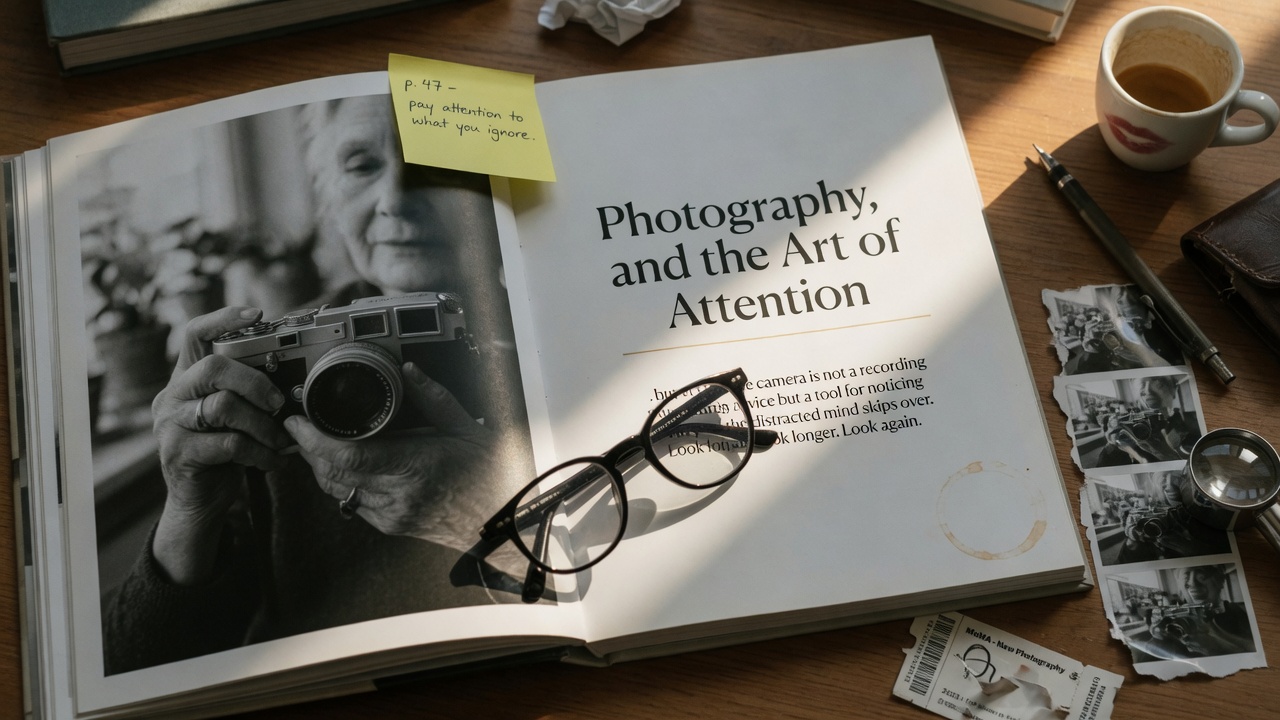
Travel, Photography, and the Art of Attention
There is a moment in every meaningful journey when awareness sharpens.
Movement slows. Details come forward. The world feels closer, more textured, more alive.
These moments often linger in memory not because they were dramatic, but because they were fully noticed. What is less often acknowledged is that attention—like timing—is rarely accidental. It is shaped by intention, by choices made before a journey begins, and by how a traveler prepares to engage once they arrive.
Photography is one of the ways that attention takes form in travel.
At its best, it is not about collecting images, but about learning how to see. A camera asks for patience: waiting for wildlife to emerge, observing behavior rather than chasing spectacle, understanding that presence often matters more than proximity. In architectural settings, attention shifts toward light, symmetry, and proportion—details that reward stillness rather than speed. Cultural moments, too, require restraint, timing, and sensitivity, where observation matters more than documentation.
In these moments, photography becomes a practice rather than a task—a way of slowing down and allowing a destination to reveal itself on its own terms.
But attentiveness does not belong exclusively to those who travel with cameras
Some travelers choose to move more lightly, carrying fewer tools and fewer intermediaries between themselves and the world around them. A phone may suffice. Sometimes it remains untouched. Experiences are absorbed rather than recorded. Memory takes precedence over proof. In these journeys, attention is expressed through presence—through listening, lingering, and allowing moments to pass unframed.
What matters is not the method, but the intention behind it.
At Civilized, these distinctions shape how journeys are designed. We consider not only where a traveler is going, but how they want to experience a place. Whether a journey calls for wildlife observation that rewards patience, architectural exploration that reveals itself through light and line, or cultural immersion that values discretion over documentation, attention becomes a defining principle.
This perspective resists the idea that travel should be exhaustive or consumptive. Instead, it asks a quieter, more discerning question: How do you want to see this place? And just as importantly, what will allow you to see it well?
When travel is shaped around attention, the journey begins to breathe. Days unfold naturally. Encounters feel unforced. Moments are allowed to emerge rather than be pursued. Whether they are captured through a lens or held quietly in memory, they feel considered—and lasting.
Seeing well, ultimately, is not about what you carry with you. It is about how present you allow yourself to be once you arrive.
For those curious to explore photography as a more intentional part of their travels, we’ll continue this conversation through workshops offered throughout the season.
Sorry, the comment form is closed at this time.